Deliberate Writing Strategies for Secondary Students: The Writing Blocks Program
Helping secondary students become confident writers doesn’t happen through one big assignment–it happens through intentional, scaffolded practice. This approach to teaching writing in middle and high school uses deliberate practice strategies to break writing into manageable skills, helping students overcome writing blocks, build literacy confidence, and improve performance across content areas. Whether you teach ELA, social studies, or another discipline, these practical writing strategies for secondary students make it easier to support struggling writers while strengthening critical thinking and communication skills.
Table of Contents
If you’re daunted by writing instruction, this post is for you. If you are looking for more 1:1 information, please check back next week. Writing is on my mind tonight.
One of the most daunting tasks for any teacher is teaching writing. In the era of texting and social media, it can feel almost hopeless. I taught 8ththrough 11th grade ELA for six years before moving on to social studies, and it is an issue in both subjects.
Regardless of the subject I’m teaching, I always require writing. Students should be doing it, and practice makes perfect, right?
Well, actually, wrong. If students are writing, that’s beneficial, and it has its place. They should be doing it. But if I sing in my typical off-key fashion every night in a friendly game of Rock Band with my son and husband, I may become more comfortable at singing, but I’m not going to get any better at it. I’m still singing off key.
Likewise, my students can journal and write essays on a weekly basis and become comfortable doing so, but they may not actually get any better at it. Eighteen weeks later, they are in the routine of writing, but their sentences are still not varied, their subjects and verbs still don’t agree, and their capitalization and punctuation are still inconsistent.
So what do we as teachers do about this? When I was working on my gifted endorsement 12 years ago, the instructor said, “If it’s not an ELA class, we should only grade the students on their content and not count off for grammar and mechanics.”
I have never disagreed with something more strongly in my career as an educator.
Why Writing Strategies for Secondary Students Matter
Writing is a medium for conveying ideas. If students are using that medium, then regardless of the subject we are teaching, they should use that medium correctly.
Would you ask a student to create a PowerPoint and accept a single slide packed with text? You would probably expect students to follow some guidelines in creating an effective presentation. The medium AND the content matter.
Why should that be any different for writing? Writing is not just the problem of the ELA teacher. Writing spans all of the content areas. Students should become adept at using the medium.
We all, then, regardless of our content area, need to have a writing emphasis. The question then becomes—how do we teach it effectively? Just having students do it is helpful, but it is not sufficient.
The Case for Deliberate Practice in Writing Instruction
I became interested in generative grammar about 11 years ago when I was fumbling with this question as I was working on my Specialist degree. Generative grammar is essentially all about the logic and structure of language. It was originated by linguist Noam Chomsky. In essence, you use existing sentences to generate new ones.
I created a simple sentence imitation program that I used in my own classroom as a daily warm up and saw distinct improvements in student writing. But I never fully fleshed it out until recently.
It has become a daily writing program called “Writing Blocks.” Writing Blocks is based on the principles of generative grammar and sentence imitation that I became intrigued by so many years ago, but the true value and function of sentence imitation crystallized for me fairly recently. It all started with my addiction to podcasts.
I love podcasts. One of my favorites is FREAKONOMICS. Back in April, they did a series on self-improvement. One of the episodes was centered around K.A. Ericsson’s research on deliberate practice.
Deliberate practice is the idea that anyone can become an expert at almost anything if they devote time each day to meaningfulpractice.
I have absolutely no musical talent, and again, if I sing in a Rock Band game every night, I may become more comfortable at singing, but the quality of my voice probably won’t improve. However, if I hire a voice coach and work on scales and improving my range and ear daily, I’m more likely to improve. That is meaningful, deliberate practice.
But what is meaningfulpractice when it comes to writing? I think it goes back to generative grammar. Students should look at existing sentences, consider their structure and meaning, and imitate them.
Most writers begin by reading and are somewhat derivative at first. On that same episode of Freakonomics, here’s what Malcolm Gladwell, an established writer had to say about his craft:
“I began as a writer trying to write like William F. Buckley, my childhood hero. And if you read my early writing, it was insanely derivative. All I was doing was looking for models and copying them. And years of doing that — out of years of doing that, emerges my own style.”
Gladwell did this by being a life-long reader. Many of our students have not been. So how do we help them make up for lost time?
That is difficult to do, just as it is difficult to learn a foreign language in old age, but it can be done.
That is what this program attempts to do.
Scaffolded Writing Instruction
Each day, students are exposed to a different sentence. They discuss the sentence. They play with its order and its meaning. They imitate it. At the end of each week, they use those sentence patterns to construct a paragraph. At the end of six weeks, they use one of those paragraphs to construct an essay.
It comes with examples, rubrics, PowerPoint Presentations, and foldable graphic organizers. Check out this video preview:
You’ve heard of note-taking. Note-catching is something a little different. And that distinction is at the heart of this post. We’re looking at graphic organizers for high school students, and as part of the Should I Use Tech for This? summer series, we’re asking whether digital graphic organizers or paper serve high school students better, and the answer circles back to the same research that guided our note-taking post way back at the start of the series. We’re also covering the folded paper technique, standard annotation graphic organizers, and the one digital tool, NotebookLM, that does something for note-catching strategies that paper simply cannot replicate.
The best student presentations I’ve seen in my classroom came from a Theory of Knowledge class that turned their exhibitions into Saturday Night Live-style comedy sketches. They couldn’t have done it without technology. And they couldn’t have done it with AI alone either. In this post, part of the Should I Use Tech for This? summer series, I’m sharing what transformative student presentation ideas for high school look like, why creative student presentations go so far beyond the standard slideshow, and the one condition that makes technology work for this task rather than against it.
I once built an elaborate digital vocabulary practice system, complete with drag-and-drop checkboxes and instructional videos, and I was so proud of it that I started selling it. It was a complete waste of everyone’s time. In this post, part of the Should I Use Tech for This? summer series, I’m sharing what that failure taught me about vocabulary practice strategies, why digital vocabulary tools for teachers shine at the surface level and fall flat at the deep and transfer levels, and how Quizlet, Quiz-Quiz-Trade, and a stack of laminated task cards all earned a permanent place in my vocabulary instruction for high school students.


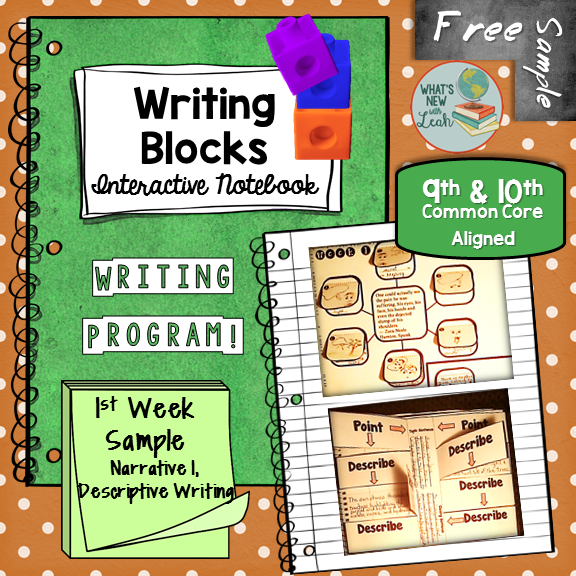 You can grab a free sample of the program HERE.


